

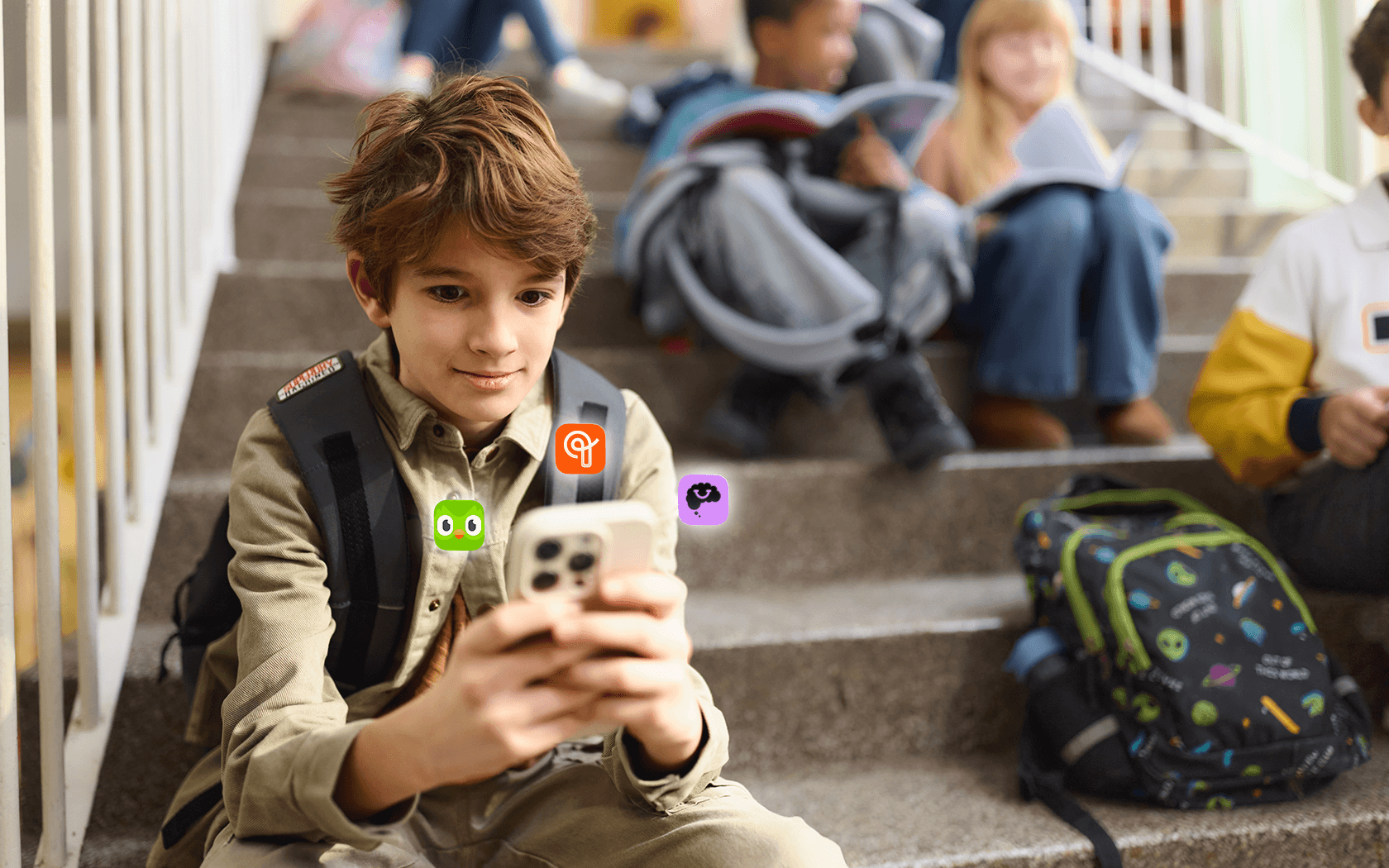
Quick answer: The best back-to-school apps for kids cover the skills that matter most during the school year, including reading, math, focus and creativity. Standouts for 2026 include Khan Academy Kids and Prodigy Math Game, Duolingo Kids and ABCmouse for reading and early literacy, Smiling Mind and Goldminds for mindfulness, and codeSpark Academy for creative problem-solving. The right mix depends on your child's age, the subjects they want to strengthen and how much screen time feels healthy for your family.
Heading back to school means new routines, new expectations and a fresh chance to build good habits. The right apps can support what happens in the classroom without turning every afternoon into extra homework. We have pulled together a round-up across the categories that come up most often for families: reading, math, mindfulness and creativity. Every app here is chosen because it balances real learning with the kind of play that keeps kids coming back.
{{messenger-inline-cta-1}}
Which kids’ apps are best for reading and early literacy?
Reading and language are the foundation everything else is built on, so it is a good place to start. Duolingo has become one of the most popular language-learning apps in the world, with interactive lessons that cover speaking, listening, reading and writing.
For younger children, ABCmouse offers a structured early-learning curriculum for ages two to eight, with thousands of activities spanning reading, math, science and art. Starfall is another strong choice for the youngest learners, with a focus on phonics and early literacy skills. Khan Academy Kids also deserves a mention here, because it goes well beyond math to include reading and reasoning, all developed in collaboration with early childhood education experts.
What are the best math apps for kids?
Math is where a good app can make the biggest difference, turning practice that feels like a chore into something closer to a game. Prodigy is a curriculum-aligned, fantasy-based math game, covering skills from first to eighth grade. Kids answer math questions to compete in duels against in-game characters, and the game adapts its content to each player's trouble spots.
SplashLearn is a favourite for kids who enjoy gamified, interactive learning, and it aligns with Common Core standards. IXL is built around skill-based practice for students from preschool through high school, with real-time analytics that help parents and teachers spot learning gaps. For younger children building early number sense, DragonBox Algebra uses friendly number characters to help kids visualize math concepts without the pressure of drills.
Which apps help kids with focus and mindfulness?
The school year brings its own stresses, and mindfulness apps can help kids manage them. Smiling Mind is a completely free meditation app with children's programs starting at age three, and it offers a free program for schools and educators as well. That makes it an easy first step for families who want to try mindfulness without a subscription.
Goldminds takes a story-first approach, wrapping breathing exercises and guided imagery inside immersive audio adventures so kids absorb the techniques without feeling like they are being asked to sit still and meditate. This works especially well for younger children who resist structured exercises. Headspace also has a dedicated kids section with breathing exercises and focus-based sessions grouped into themes like calm, focus, kindness and sleep, though it is a section within an adult app rather than a standalone product.
What are the best creative apps for kids?
Creativity matters as much as any core subject, and some of the best apps blend the two. codeSpark Academy introduces coding to kids ages three to ten through puzzles and games, teaching problem-solving and logic in a way that feels like play rather than a lesson. It is a gentle on-ramp to computational thinking, and it does not require any reading to get started.
For families who want something tied to trusted content, PBS Kids Games offers free, ad-free activities from beloved shows for ages two to eight, covering science, math and social skills across hundreds of games. It is a safe, wholesome option that keeps curiosity front and centre.
Frequently asked questions
Are educational apps actually good for kids?
Used thoughtfully, yes. The best educational apps combine real skill-building with engaging design, and many families use them to supplement schoolwork or homeschool routines. The key is choosing age-appropriate apps and keeping screen time balanced with other activities.
How much screen time is too much?
There is no single right answer, and it depends on your child's age and your family's routines. A helpful approach is to focus on the quality of the screen time rather than just the quantity, and to choose apps that build skills, encourage creativity or support wellbeing rather than passive scrolling.
Are these apps free?
Many offer free versions or free trials, and some, like Smiling Mind and PBS Kids Games, are completely free. Others use subscription models that unlock a fuller library of content. It is worth testing the free tier first to see whether an app fits your child before paying for a subscription.
What age are these apps for?
The apps here span a wide range, from early learners around age two through to teens. Reading and math apps like ABCmouse and Khan Academy Kids are geared toward younger children, while Duolingo and Prodigy work well for older kids and beyond. Always check the recommended age range before downloading.
Image credit: skynesher / Getty Images