

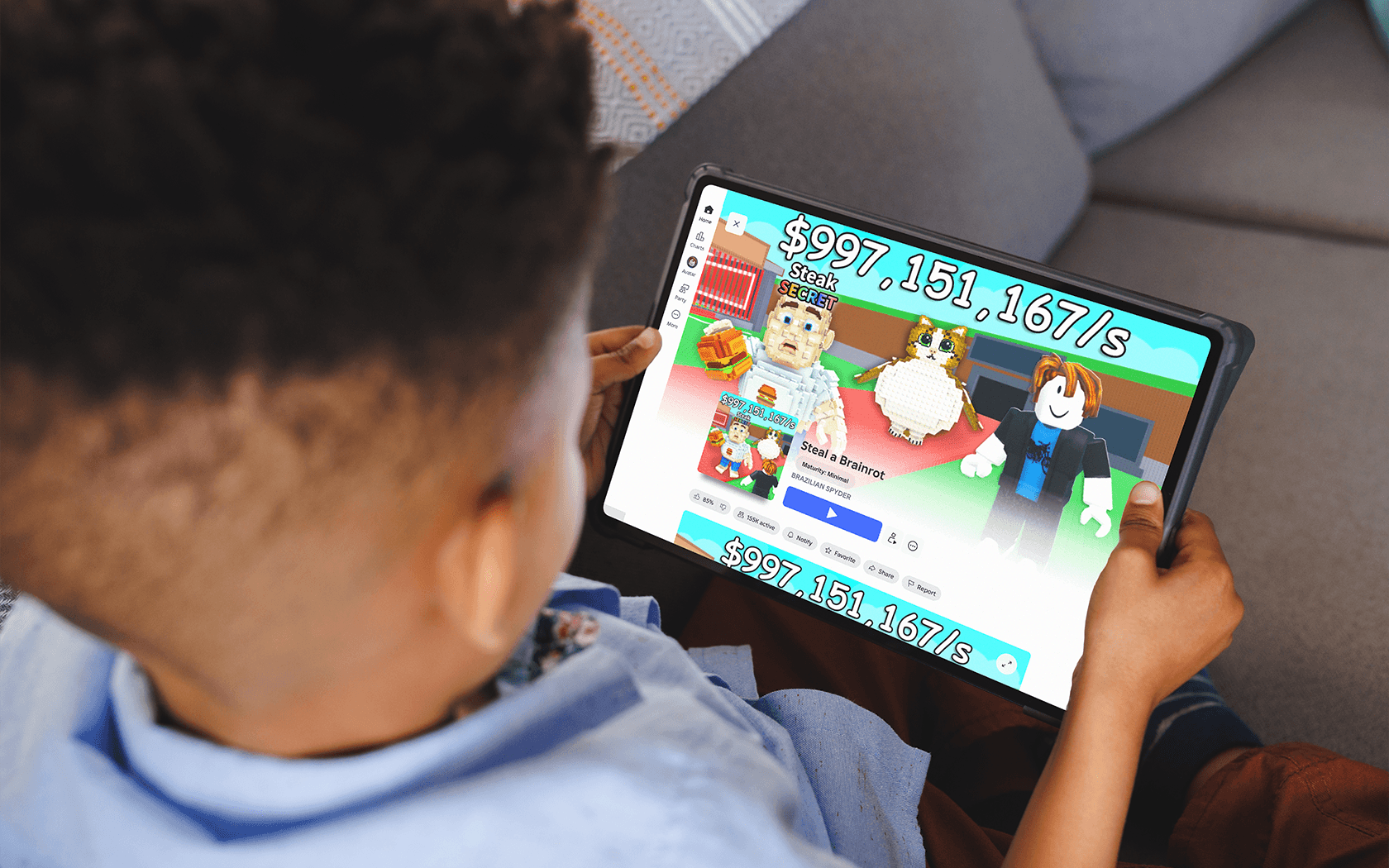
The Short Answer: Brainrot games are a wave of fast, silly, hyper-viral Roblox experiences built around internet meme culture. The biggest of them, Steal a Brainrot, lets kids collect absurd meme characters and steal them from other players. These games aren't violent, but they are engineered to be addictive. They push real-money Robux spending, and most are played on public servers where strangers can join. They're not uniquely dangerous, but they reward a few specific habits worth knowing about before your kid asks to play.
{{messenger-inline-cta-1}}
What does "brainrot" actually mean?
If you've heard your kid say "brainrot" and assumed it was an insult, you're half right. The word started as slang for low-quality, hyper-stimulating internet content, the kind of stuff that's funny for ten seconds and forgotten in eleven. Kids use it knowingly, and a little ironically. They know it's junk. That's part of the joke.
What are the top brainrot games right now?
A quick map of the landscape, biggest first. Popularity in this genre changes fast, so treat this as a snapshot rather than a permanent ranking.
- Steal a Brainrot is the one that started it all and remains the giant. The loop is simple: buy rarer Brainrots from a conveyor or steal them from other players, generate money and "rebirth" to reset your progress in exchange for better stats. It's so big it even hosted a Bruno Mars concert in January 2026 that peaked at 12.8 million concurrent players.
- Escape Tsunami for Brainrots has surged to the top of the charts in 2026. The objective is simple: collect Brainrots while escaping massive tsunami waves. Fast, chaotic and very replayable.
- Plants vs Brainrots is a tower-defense twist: a Plants vs Zombies riff where you plant seeds in your garden, your plants fight off the brainrots and the brainrots generate money. More strategy, less PvP stress.
- Brainrot Evolution is an eat-to-grow game: you eat to gain levels, unlock new evolutions and collect wins and pets, with updates every Saturday.
- Find the Brainrot is a collection-and-search game with a completionist hook: the brainrots are hidden across the map, and there are currently over 500 of them to track down for the index.
Why are kids so into brainrot games?
A few patterns hold across nearly all of them: a collect-defend-upgrade loop, rarities that drive desire, rebirths or resets that extend playtime and Robux somewhere in the mix. Here’s a breakdown of their appeal:
- The collecting loop feels like Pokémon with higher stakes. Each character has a rarity, and rare ones are genuinely hard to get. Collecting them feels good. Stealing one from someone else feels even better. And losing one stings.
- They're social and chaotic. Most of these games are multiplayer, and the fun is in trolling friends, defending your stuff and the unpredictable scramble of a public server. It's recess energy.
- The humor is the point. The characters are deliberately stupid, and that's the appeal. Kids are in on the joke. Sharing a favorite brainrot is a bit of playground currency right now.
- They're built to keep you coming back. Many use idle income. Your characters earn money while you're away, which gives kids a reason to log back in constantly. That's the same mechanic mobile games have used for years, and it's effective by design.
Are brainrot games safe for kids?
There's no violence and no mature content in the core gameplay, so the honest answer is: they're about as safe as Roblox generally is, with three specific things worth watching.
- Real-money spending. Robux let you buy items that protect your stuff, boost your odds or unlock exclusives. That creates pressure to spend, and these games generate lots of money for developers through microtransactions. Left unchecked, a kid can run up real money fast.
- Strong emotional reactions. This one surprises parents. Losing a prized character can cause real meltdowns. The game is built to provoke exactly that intensity.
- Strangers on public servers. This is the standard Roblox risk, not a brainrot-specific one. On a public server, your child might be able to play with anyone of any age, and parents can limit access by using a private server instead. Some older players deliberately target younger ones just to upset them.
The practical move on all three is the same: set up Roblox's parental controls. Turn off or cap Robux purchases, restrict chat to friends-only and use Experience Privacy to block non-friends from joining. Playing a round or two with your kid is also the fastest way to understand what they're actually doing in there.
Frequently asked questions
What is a brainrot in Roblox?
A brainrot is a collectible meme character inside these games. The most recognizable ones come from the "Italian brainrot" trend: AI-generated creatures with nonsense names and absurd designs. In a game like Steal a Brainrot, each one earns you in-game money and can be stolen by other players.
Is Steal a Brainrot appropriate for young kids?
There's no violent or mature content, so the gameplay itself is generally fine. The things to manage are real-money Robux spending, the strong emotional reactions losing a character can trigger and stranger contact on public servers. With parental controls set up, many families treat it as harmless weekend fun.
Can my child spend real money in brainrot games?
Yes. They run on Roblox's Robux currency, and spending often gives a competitive edge. Parents can turn off purchases entirely or set a spending limit through Roblox's parental controls.