


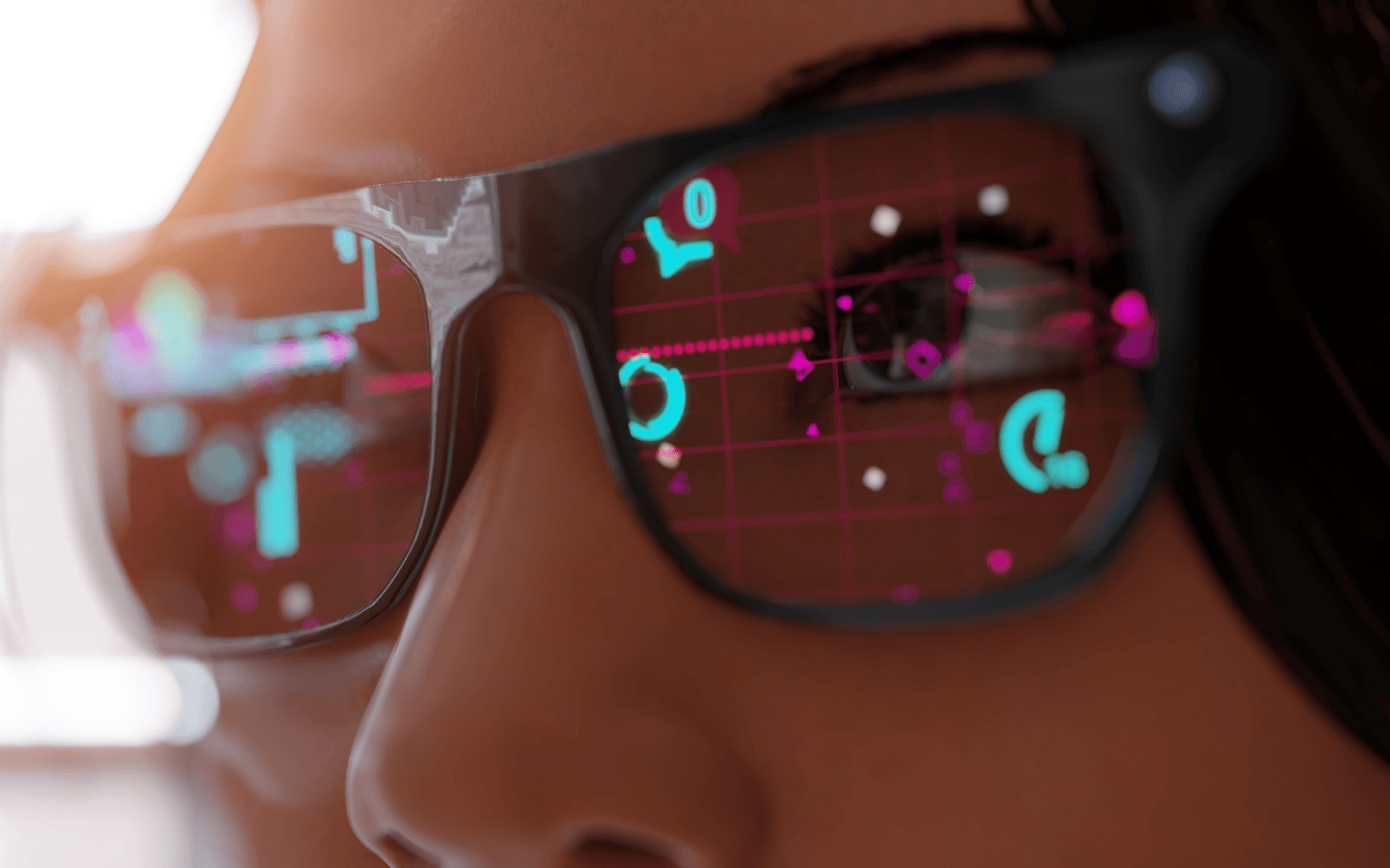
The short answer: Social media glasses like Snap's Specs and Meta's Ray-Ban Display put a camera, a microphone and an AI assistant on the wearer's face, and they are being sold as the device that replaces your phone. For families, the real shift is not a new gadget. It’s that recording in public is becoming invisible and hard to notice at all, and the companies building it have weak track records on children's privacy and wellbeing.
{{messenger-inline-cta-1}}
What are social media glasses?
Both companies are selling these as the device that replaces your phone, the always-on computing layer over daily life.
- Meta's camera glasses have been on sale since 2021 and are already common. The line expanded in 2026 with new entry models that puts them within reach of a mass audience.
- Meta Ray-Ban Display, the premium model adds a small screen inside the right lens, controlled by a wristband that reads the muscle signals in your hand. These are hard to get your hands on for the time being, with years-long waitlists in many places.
- Snap Specs are not on the market yet. They are open for pre-order, and Snap says they will ship in the fall of 2026 in the United States, United Kingdom and France.
How are social media glasses different from a phone?
A phone makes recording a visible, deliberate act. Someone raises it, and the people around them know what that means. Glasses erase that signal entirely.
- A wearer can capture photo, video and audio with a small gesture or a voice command, and the people nearby often have no idea. The recording light is easy to miss.
- Parents are already noticing. Videos of families spotting clusters of camera glasses at beaches and pools have spread widely, and phone apps now exist just to detect the glasses around you.
The track record is the problem
The companies building these glasses are the same ones with the weakest record on children's wellbeing.
- Meta faces a federal class action filed in March 2026 alleging that captured footage, including recordings from private moments, was routed to overseas subcontractors without adequate disclosure.
- Meta has weighed adding facial recognition to future models, after leaving it out of earlier ones on ethical grounds.
- Updated privacy terms mean voice recordings can be used to train AI by default, with deletion left to the user.
What parents can actually do
Like any new technology or hardware, it’s important to ask questions and make decisions that are right for your family.
- Decide where recording is never okay in your home, and say it out loud to the kids and the adults. This is a good rule whether it’s Meta glasses, Snap SPECS or a regular phone.
- Talk with your children about the fact that a camera is not always obvious, so they know the feeling of being watched is worth trusting.
- Ask what any device collects, where it goes and who can see it before it comes through your door.
FAQs
Can kids buy these glasses?
The premium models are expensive, but the newer Meta line lowers that barrier, and any glasses in a household affect the children around them whether or not a child is the one wearing them.
Do the glasses record all the time?
Not by default on current consumer models, but capture is fast, quiet and easy to trigger, which is the core of the concern.
Is it legal to record my child in public?
Video recording in public spaces largely falls outside existing privacy law, though audio recording is more restricted in some states. The rules were not written with face-worn cameras in mind.
Image credit: aislan13 / Getty Images