


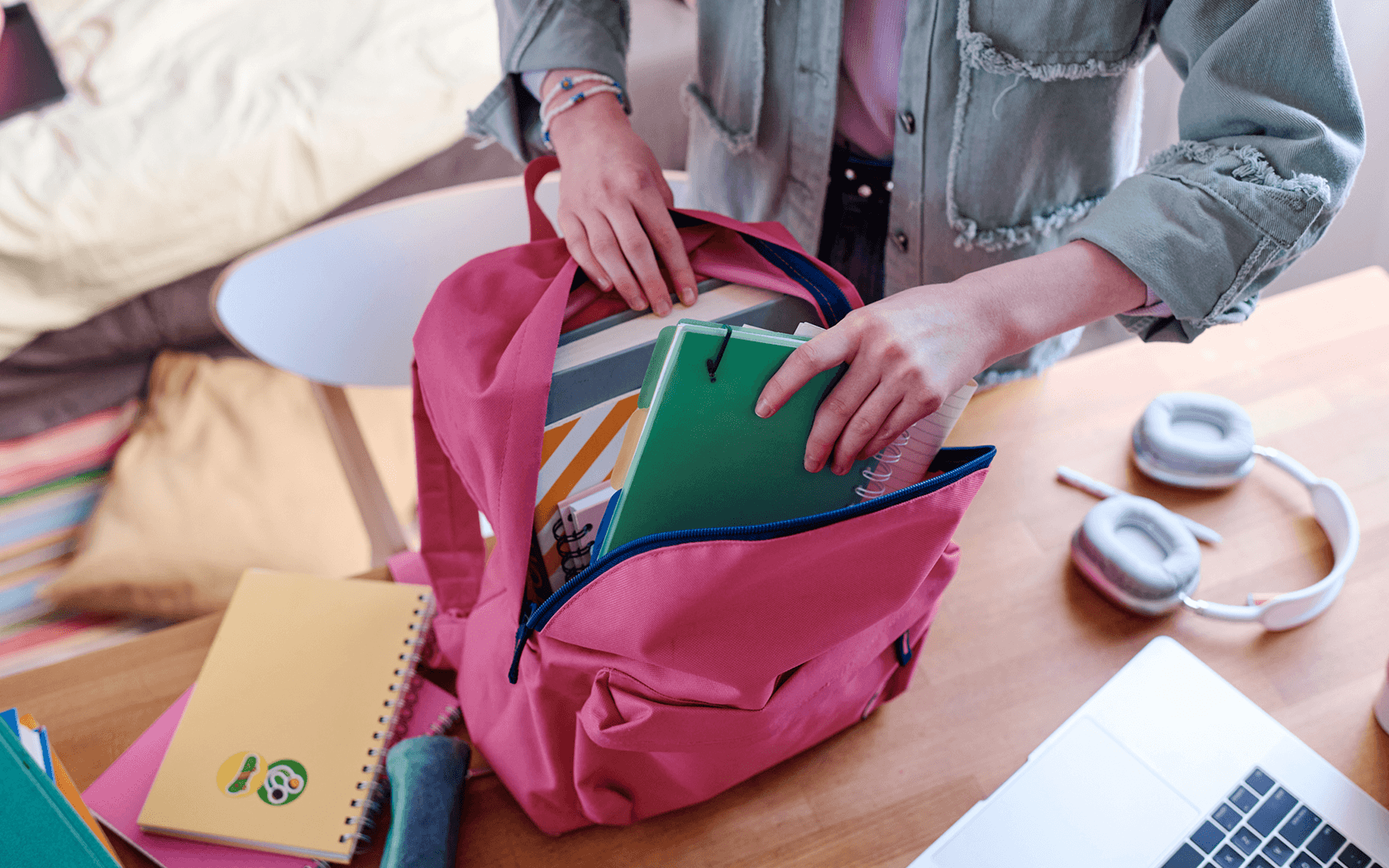
We love technology, but we also believe some of the best family moments happen when the screens are put away. That's why we're big fans of the "analog bag": a simple kit you keep stocked and ready for screen-free time, wherever life takes you.
Think of it like a go-bag for unplugging. Whether you're headed to a restaurant, a long car ride, or just a rainy afternoon at home, having a bag full of purposeful, hands-on activities means you're never scrambling, and your kids are never reaching for a screen out of boredom.
{{messenger-inline-cta-1}}
What goes in an analog bag?
The best analog bags are personal to your family, but here are some tried-and-true categories to get you started.
Cards and games
A standard deck of playing cards might be the single best value item you can pack. Go Fish, Snap and Crazy Eights work brilliantly for younger kids; Rummy, Spit and War scale up nicely as they get older. If you want something more structured, Uno and Spot It are compact, fast to learn and genuinely fun for a wide age range. For families with older kids, a travel-sized Bananagrams or a magnetic chess set punch well above their weight.
Drawing and writing supplies
A small hardcover notebook and a tin of coloured pencils are endlessly versatile. Younger kids can draw freely or play Pictionary-style guessing games. Older kids might write stories, design their own comics or get into dot-grid puzzles like Boxes. Keep a few blank index cards in there too. They're perfect for homemade trivia, memory matching games or just doodling.
Conversation starters
This is the sleeper hit of the analog bag. Our favourite pick is TableTopics Kids, a set of beautifully simple question cards designed to get families actually talking. The "To Go" version is compact enough to slip right into your bag, and the questions are genuinely good: warm, funny and surprisingly thoughtful.
Fidgets and quiet activities
For the moments when kids need to decompress rather than engage, a small puzzle cube, a tangram set or a palm-sized maze toy can be a lifesaver. These are especially handy for waiting rooms, long flights or any time a child needs something to do with their hands without a lot of stimulation.
Something cozy
If your kids are young, consider tucking in a small favourite book or a tiny stuffed animal. Familiar comfort items can make unfamiliar situations, like a long journey or a new place, feel a lot more manageable.
How to use it well
The bag works best when it becomes a reliable ritual rather than a last resort. A few things that help: Let your kids help build it. When they have a say in what goes in, they're far more likely to reach for it. Do a refresh every couple of months, swap out a game, add a new type of paper, throw in something seasonal. Keeping it a little fresh goes a long way.
Set the tone by putting your own phone away when you open the bag. Kids pick up on cues fast, and if a parent is half-present, the magic fades quickly. The analog bag works best as a shared experience.
Don't overfill it. Five items that your family genuinely loves will outperform fifteen things that feel like obligations. Start small, see what gets used and build from there.
The bigger picture
The analog bag isn't about being anti-tech. It's about being intentional. It's a small, practical way to make space for the kind of connection that happens when there's nothing else competing for your attention. A card game at a restaurant. A long story invented together on a road trip. A question that leads somewhere unexpected. Those are the moments that stick. And all it takes is a bag.
Image credit: AnnaStills / Getty Images