


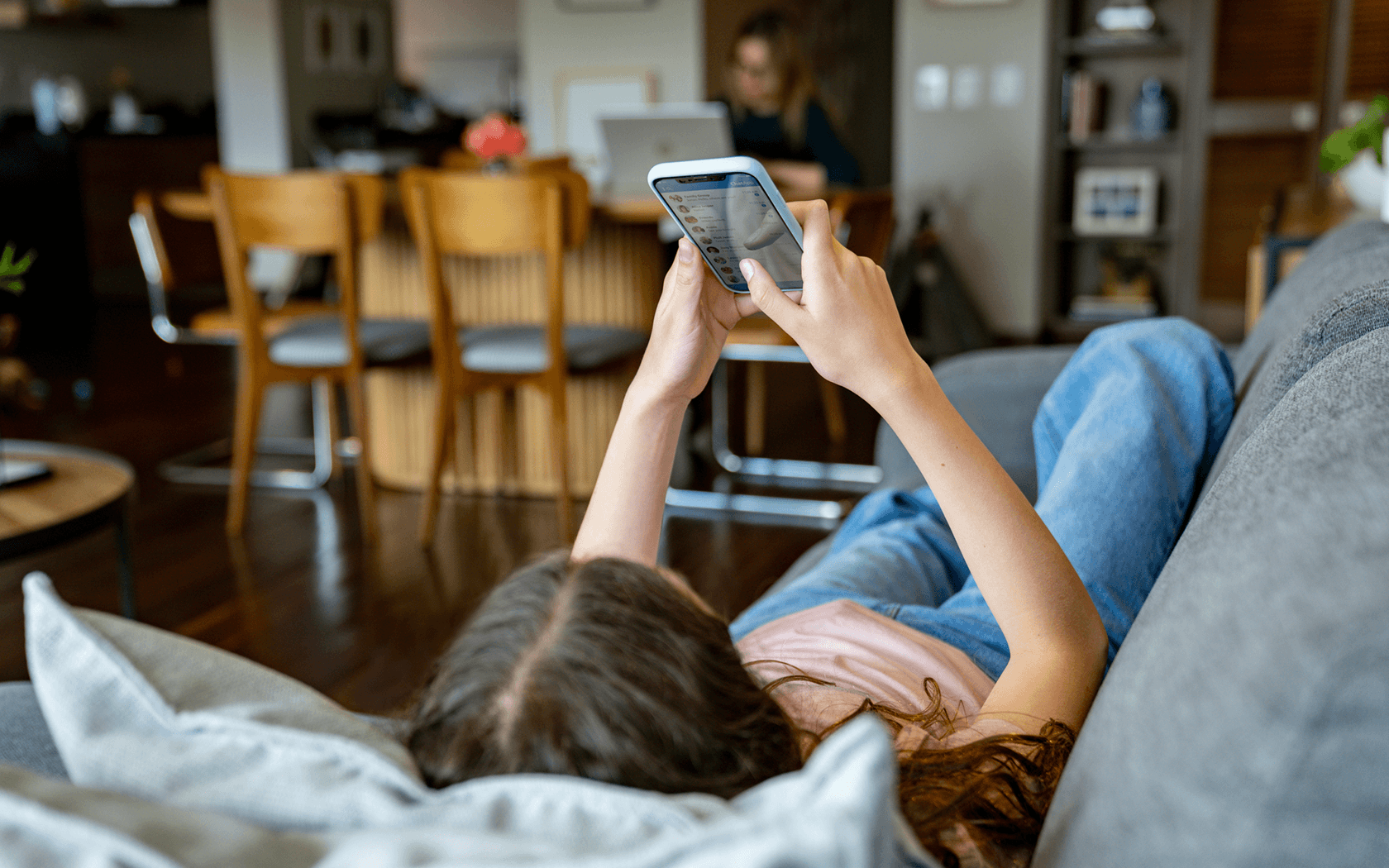
The short answer: The American Academy of Pediatrics is moving away from a single screen time number for kids. Their updated 2026 policy statement shifts the conversation away from "minutes per day" and toward what kids are actually doing online, and the design of the platforms they're using. As a rough guide, the AAP suggests under 1 hour per day for toddlers and preschoolers, and 1–2 hours of recreational screen time for school-aged kids and teens. But the bigger message is that content quality, context and design matter more than the clock.
{{messenger-inline-cta-1}}
Why parents are asking this question right now
If you've felt whiplash trying to keep up with the screen time conversation, you're not alone.
In the last six months, a Los Angeles jury found Meta and Google liable for designing addictive platforms that harmed a young user. Australia's under-16 social media ban came into force in December. And a growing list of others are following suit. Closer to home, dozens of US states are passing their own age verification and design-restriction laws.
The collective message from courts and lawmakers is clear: the platforms our kids use were not built with their well-being in mind. So parents are reasonably asking: okay, but how much is too much for my kid?
The AAP's updated policy statement, released this year, gives the most current and evidence-based answer available. And it's a meaningful departure from the simple time limits parents have heard for decades.
What's in the new AAP guidance
The biggest shift: the AAP is no longer treating screen time as a single thing to be measured in minutes. They're calling it a "digital ecosystem,” and they're explicit that this ecosystem can't be managed the way we managed TV in the 1990s.
Why? Because today's platforms are designed around engagement. Algorithmic feeds, autoplay, infinite scroll and intermittent rewards are all engineered to keep kids on the app longer. The AAP names these directly, alongside the business models that drive them: data collection and advertising revenue.
That's a notable position for a pediatric body to take. It reframes screen time as something shaped less by parental willpower and more by industry design choices that are largely outside any individual family's control.
In place of a single number, the AAP offers a framework called the 5 C's, with questions parents should ask for each:
- Child: What are my child's strengths, vulnerabilities and developmental stage?
- Content: What are they actually watching, playing or interacting with?
- Calm: Are they using screens to self-soothe, and is that displacing other coping skills?
- Crowding Out: What is screen time getting in the way of, like sleep, play, reading or family?
- Communication: Are we having ongoing, open conversations about their digital life?
This is a more useful framework than a stopwatch, but it's also more work. It asks parents to actively engage with what their kids are doing online, not just count the hours.
Age-by-age: what the AAP says about time limits
Even with the shift in framing, the AAP does still offer some time-based guidance for families who want it. Here's the breakdown:
Under 18 months
Infants struggle to transfer information from a screen to the real world. The AAP's position is essentially that babies don't learn from screens, though occasional brief, high-quality content (like Sesame Street) isn't harmful.
Toddlers and preschoolers (ages 2–5)
Less than 1 hour per day of high-quality content, ideally co-viewed with a caregiver. The AAP is particularly cautious about using tablets or phones to calm young kids. Research links it to weaker emotion regulation and more anger outbursts over time.
School-aged kids (ages 6–12)
The AAP groups school-aged kids and teens together when offering time guidance: 1–2 hours per day or more of recreational (non-school) media is the suggested range. Quality matters more than quantity. The AAP flags that excessive use is associated with lower academic achievement, weaker attention control, sleep disruption and increased risk of myopia progression.
Teens (ages 13–18)
The same 1–2 hours or more per day of recreational media range applies, but the AAP emphasizes the relationship is heterogeneous. Some teens thrive online, others struggle. Early adolescence (11–14) appears to be a particularly sensitive window. Teens with ADHD, anxiety, or autism, or who are vulnerable to developing eating disorders, face an elevated risk.
The AAP is careful to note these are not bright lines. The most important factors, they say, are high-quality content and protecting time for sleep, physical activity, reading and in-person relationships.
What the AAP guidelines mean for parents
If you're hoping for a clean number to point to when your kid asks "why can't I have more time?", the new AAP guidance won't exactly give it to you. But it does give you something more durable: a way of thinking about the problem.
A few practical takeaways from the policy statement:
- Quality beats quantity. An hour of high-quality, age-appropriate content with a parent nearby is different from an hour of algorithm-driven short-form video alone in a bedroom. Treat them differently.
- Protect sleep, hard. The AAP is unusually firm on this one. No screens an hour before bed. No devices in the bedroom. Enable "do not disturb" overnight.
- Co-view when you can. Watching, playing or learning alongside your child consistently shows up in the research as protective.
- Watch for "calming" use. When devices become the default tool for managing big feelings, kids can miss out on developing their own emotional regulation skills.
- Crowd in good things. The AAP frames healthy media habits less as restriction and more as making sure other things, like sleep, outdoor play, reading, sports and family time, get their share of the day first.
- Be intentional about the first phone. The AAP is clear that research doesn't point to a specific age. Things to weigh: their digital literacy, their honesty with you, how they handle social conflict and whether they actually need one. Flip phones, kid-specific phones or watches can fill practical needs without unlocking full app access.
- Rethink personal tablets. This one might be the most counterintuitive recommendation in the policy statement: the AAP says children won't miss out on learning opportunities if families delay giving them a tablet. They recommend a shared family tablet over one that belongs to the child, since personal tablets are designed for solo use and make it harder for caregivers to stay involved. Reserved use for road trips, flights or medical procedures is fine.
- Set phone-free zones. The AAP names four specifically: mealtimes, bedrooms, the hour before bed and during homework. They also recommend "one screen at a time," turning off the TV when no one is actively watching it.
- Use parental controls in more places than you'd think. The AAP recommends setting controls (time, downloads, contacts, purchases) not just on phones, but on wireless routers, tablets, gaming consoles, social media accounts and school-issued devices.
- Talk often, and talk about specific things. The AAP doesn't just say "have conversations.” It points to specific topics worth raising regularly: recognizing ads, the difference between private and shareable information, body image, FOMO and the permanence of anything posted online. A steady drumbeat beats one-off lectures.
FAQs
How much screen time is too much for a 5-year-old?
The AAP recommends less than 1 hour per day of high-quality content for kids ages 2–5, ideally co-viewed with a caregiver. Heavier solo use of tablets and phones at this age is associated with weaker emotion regulation, language delays and more behavioral challenges.
What's the screen time recommendation for teens?
The AAP suggests 1–2 hours or more per day of recreational media for teens, but emphasizes that quality, content type and individual differences matter more than the number. Early adolescence (11–14) appears to be a particularly sensitive period.
Did the AAP change their screen time rules in 2026?
Yes. The 2026 policy statement moves away from a single time-based limit and toward a broader framework called the 5 C's (Child, Content, Calm, Crowding out, Communication). Time guidance still exists, but the AAP is explicit that platform design and content quality matter at least as much as duration.
Should I ban social media for my kid?
The AAP doesn't recommend a blanket ban, but is critical of engagement-based design and supports policy changes like default safety settings, age assurance and limits on algorithmic targeting of minors. Many countries have moved to ban social media for under-16s; experts are divided on whether bans are effective or whether better-designed platforms are the answer.
Does the screen time limit include schoolwork?
No. The 1–2 hour recommendation refers to recreational screen time, not school work or educational content used as part of learning. The AAP also flags that distraction from school-issued devices (kids accessing games or videos on classroom laptops) is a real concern worth raising with schools directly.
What's the best way to manage screen time without constant fights?
The AAP recommends building a Family Media Plan together, focusing on screen-free zones (mealtimes, bedrooms, the hour before bed), and modeling healthy habits as a parent. Consistent, calm boundaries beat reactive ones.
Sources: American Academy of Pediatrics, Digital Ecosystems, Children, and Adolescents: Policy Statement (2026)